Ingress
Ingress is a web ticketing and event admission system. Students and other attendees can register for events and get tickets online. At the venue, staff can scan tickets over a local network even if the public internet connection is down.
The problem
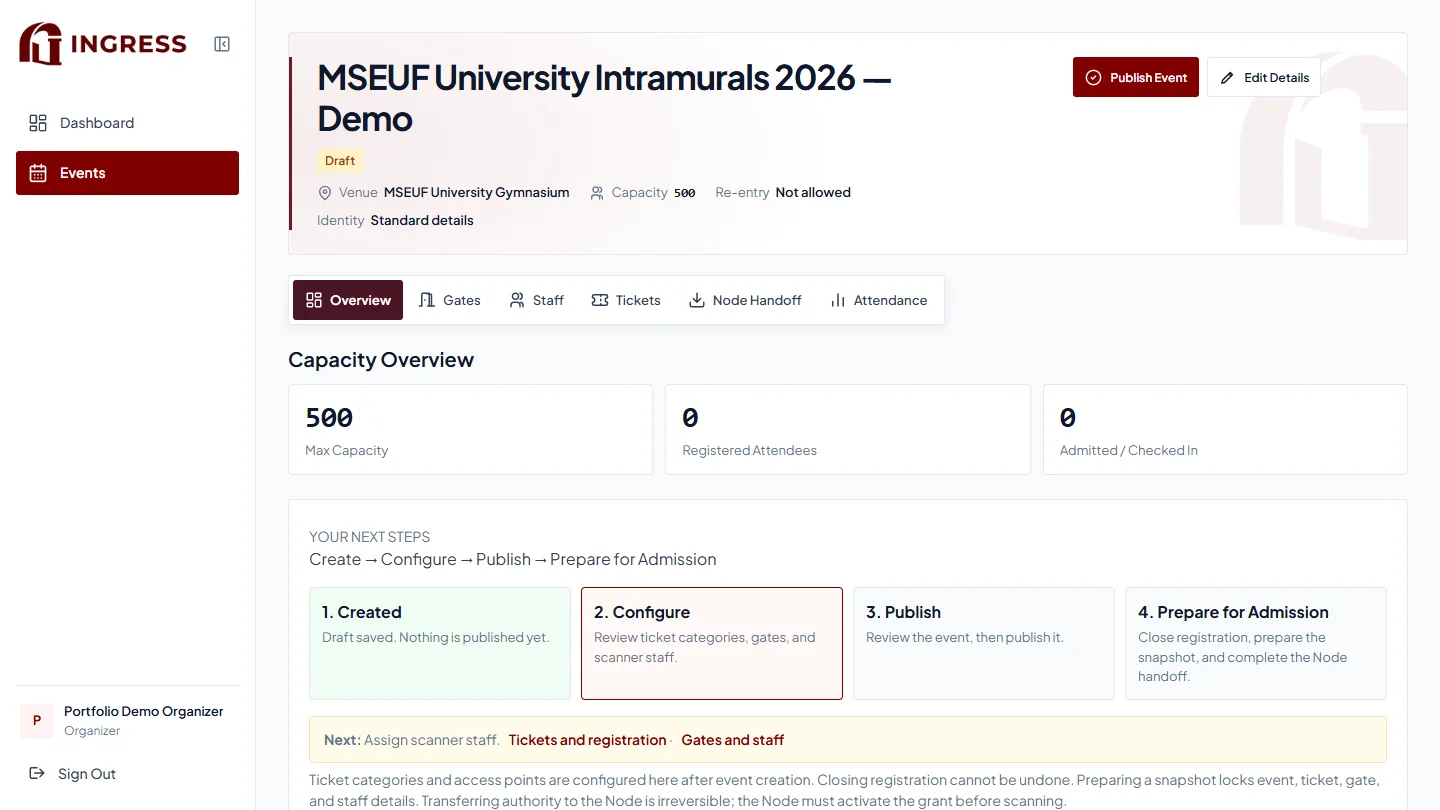
Online ticketing and gate admission have different needs. Registration depends on the web service, but a busy entrance cannot stop whenever the public connection fails. Several staff members may also scan tickets at the same time. The system needs one reliable place to decide whether a ticket is valid and whether an entry has already been recorded.
What I worked on
I worked on the Laravel and PostgreSQL backend, the split between the Cloud and Event Node, and the Expo staff-scanner flows. This included event and ticket APIs, local admission rules, synchronization, scanner pairing, ticket review, confirmation, and walk-in handling.
How it works
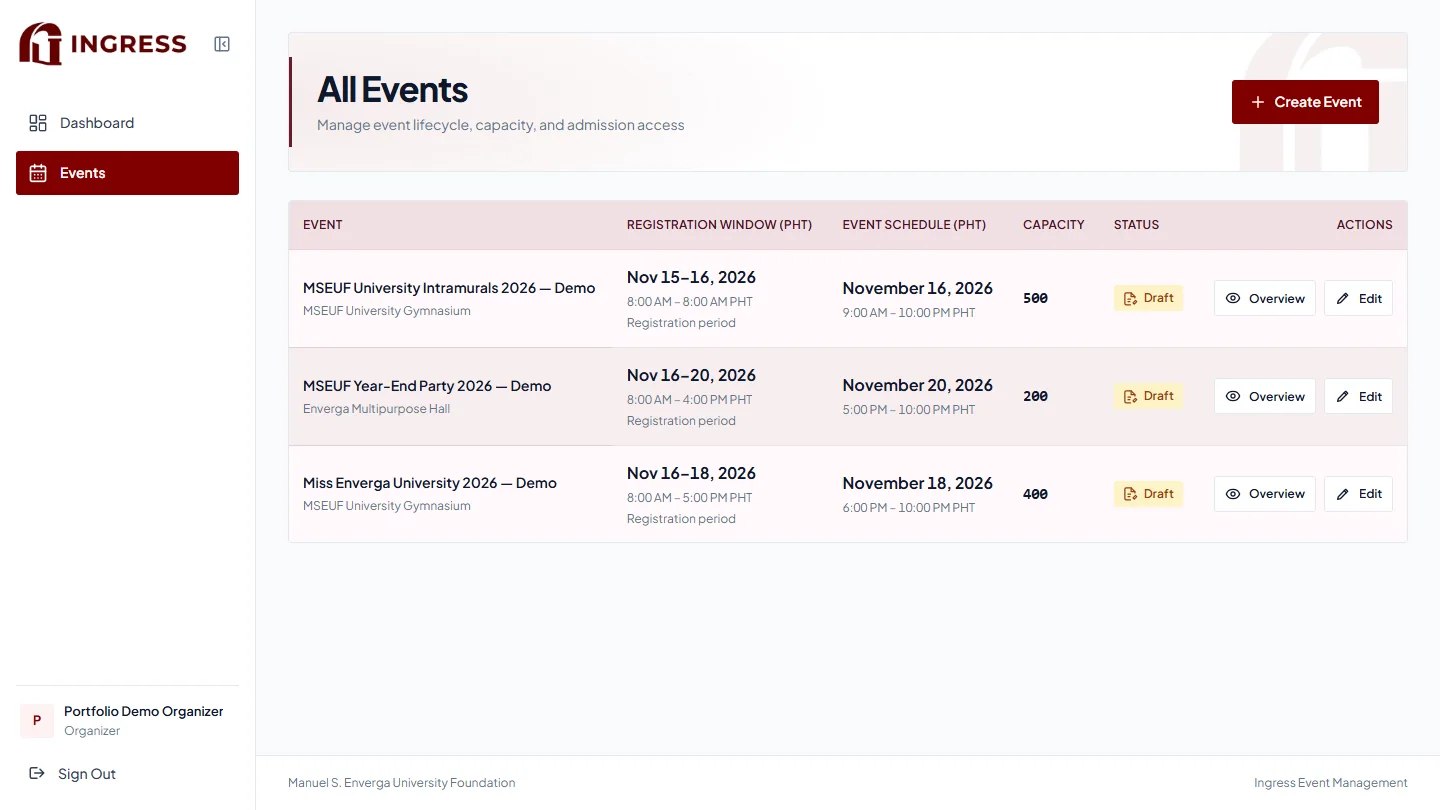
The Cloud handles online registration, tickets, event setup, and attendance reports. Students use the website to manage their tickets. The mobile app is for gate staff only; it does not include a student ticket wallet.
Before an event, the organizer prepares a versioned snapshot of the event data. The snapshot includes the information that the Event Node needs to validate tickets and staff access. The transfer is an operator-controlled process, not automatic background delivery. The Node checks the transferred data, imports it into a separate PostgreSQL database, and activates a signed authority grant. Only then can it record admission for that event.
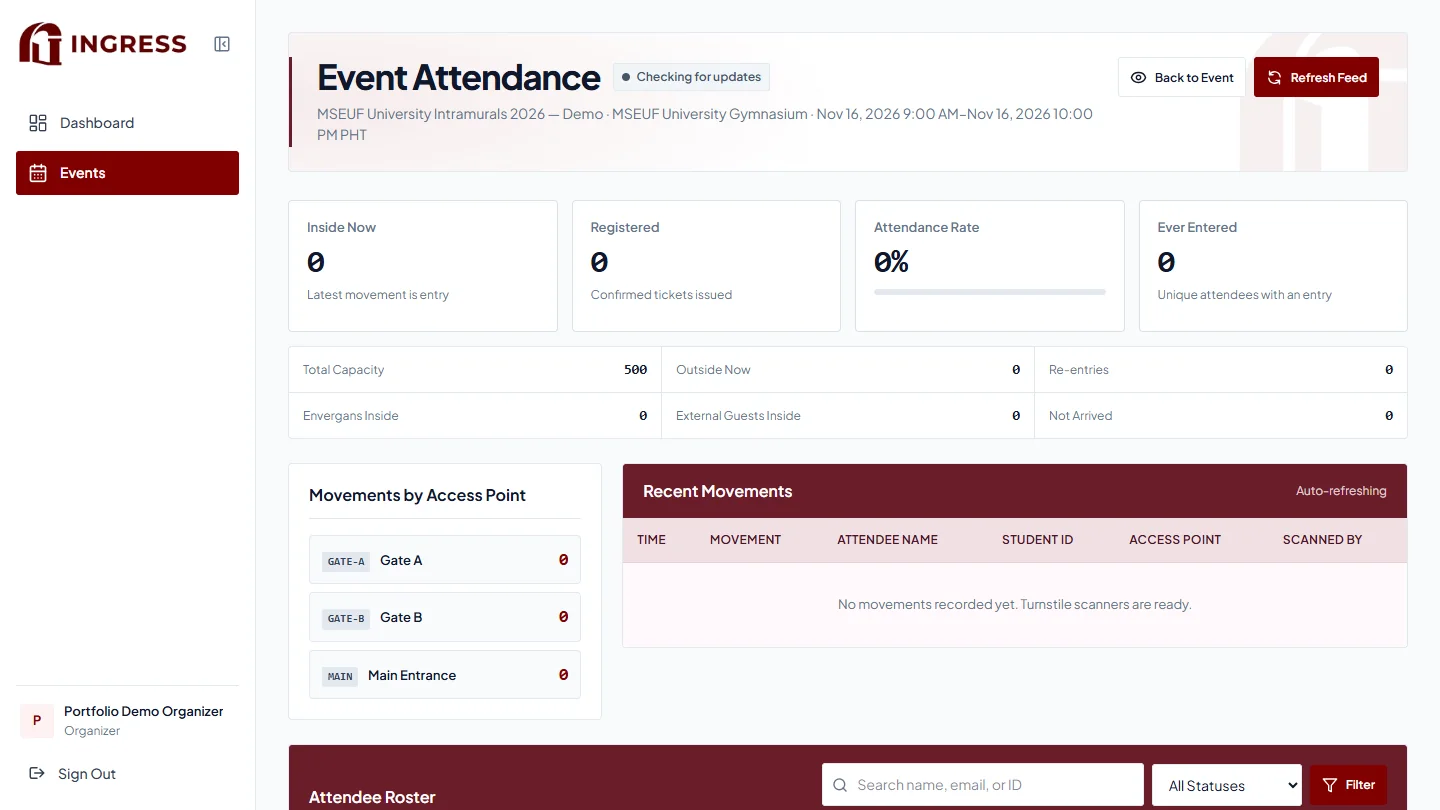
Staff phones connect to the Node through the venue LAN. A scan first shows a preview of the ticket and attendee. The scan alone does not record entry. Staff must confirm the action. The Node checks the ticket, staff assignment, gate, and current admission state again before it saves an entry or exit.
The Node keeps admission records in its local database when the Cloud is unreachable. When connectivity returns, it sends records to the Cloud in authenticated batches. The sync process can retry the same batch without creating duplicate admissions.
Ingress also supports ticket transfers. Accepted transfers replace the old ticket credentials so the earlier QR cannot be used again. The checkout flow for paid tickets is simulated; it does not charge real money.
Key technical decisions
Use a separate local admission authority. Staff phones share one Event Node instead of making independent admission decisions. This allows local operation while keeping one database responsible for entry and exit records. The venue LAN and Event Node must still work; only the public internet connection can be absent.
Use transactions and locks for competing requests. Registration checks event capacity inside a database transaction. Admission checks the ticket and access rules while holding the required database locks. This helps prevent two concurrent requests from taking the last seat or recording the same entry twice.
Make retries safe. Each scanner request carries a client scan ID. The backend can recognize a repeated request and return the recorded result. Authenticated batch synchronization uses the same principle when the Node reconnects to the Cloud.
Testing and current status
Ingress is a course project under active development. The repository includes Laravel feature tests and a separate PostgreSQL concurrency test script. That script runs overlapping database requests to check final-seat registration, admission races, and retry behavior. These checks are stronger than testing the same sequence one request at a time.
Live venue and physical-device acceptance remain pending. The current design also requires manual snapshot delivery. It does not have a complete safe recovery procedure if an active Node must be replaced after receiving authority. It has no real payment-provider integration.
More screenshots