Provision
Provision is a household pantry app for iPhone. It helps people track food, check expiry dates, plan what to cook, and add missing ingredients to a shopping list. Its Cook with Pip features connect recipes to the food that a household already has.
The problem
A household may buy the same item twice, forget older stock, or plan a recipe without checking what is available. Food choices can also depend on allergies and preferences. A useful cooking app needs to check real pantry records and ask before it changes shopping or inventory data. It should not treat an AI answer as a reliable stock count or food-safety decision.
What I worked on
I built the FastAPI backend and worked on the native SwiftUI app. My work covers pantry records, stock batches, shopping lists, recipe matching, household access rules, and Cook with Pip. I also worked on the review and confirmation steps that protect shopping and inventory changes.
How it works
Provision stores pantry items in batches. Each batch can have its own quantity, purchase date, and expiry date. When a user records consumption, the backend uses first-expiring-first-out (FEFO) order so earlier-expiring stock is used first where possible. Inventory actions leave records of what changed.
A household can have more than one member. The backend checks household membership before it returns or changes shared pantry data. Member food preferences and declared allergies are also part of recipe evaluation. Unknown ingredient details or an unresolved allergy concern require review; the app does not guarantee that food is safe.
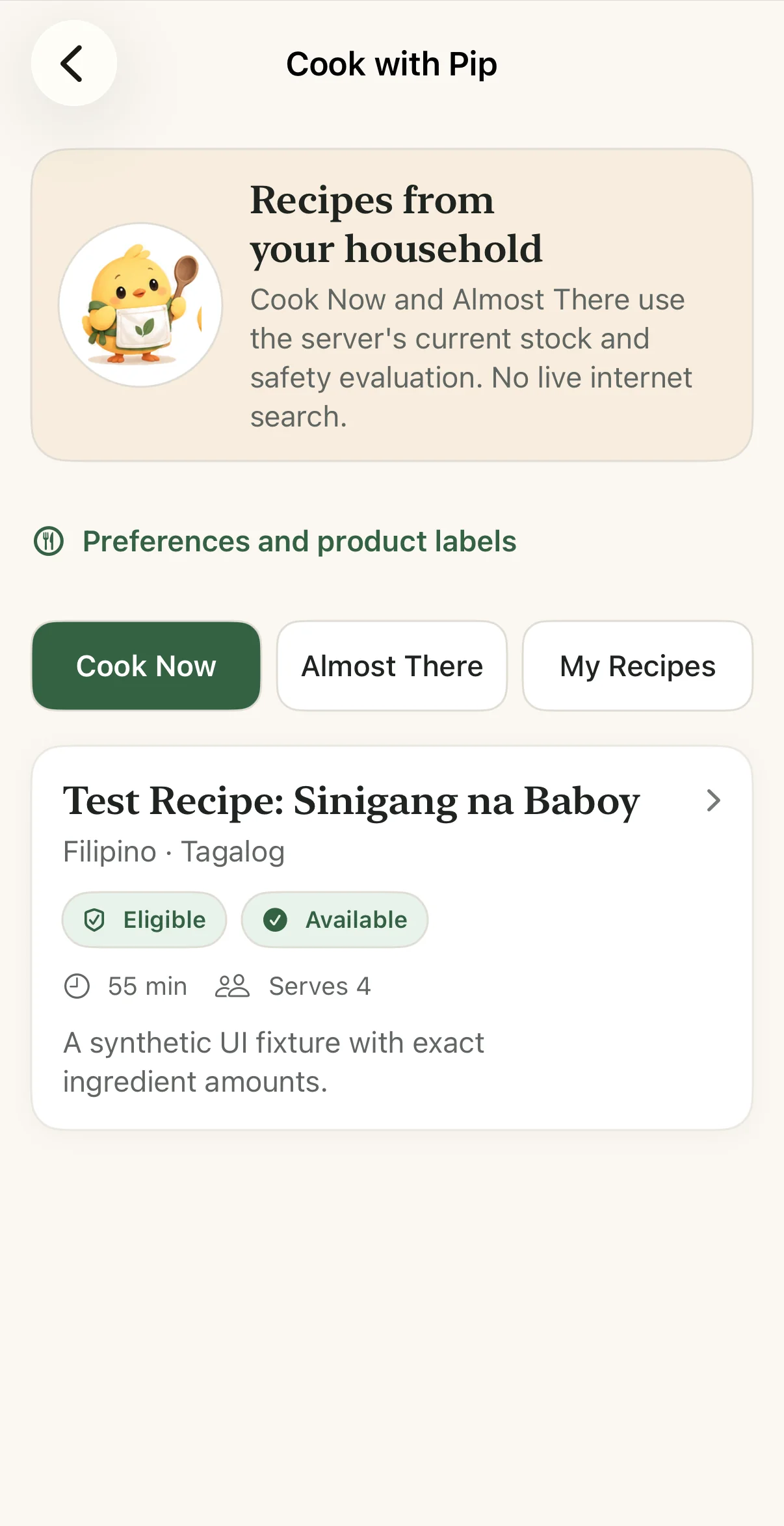
Cook with Pip has recipe views such as Cook Now and Almost There. The backend compares required ingredients with usable pantry quantities and identifies what is missing. Product and ingredient mappings help it compare items with different names or units. It does not assume that two ingredients match just because their labels look similar.
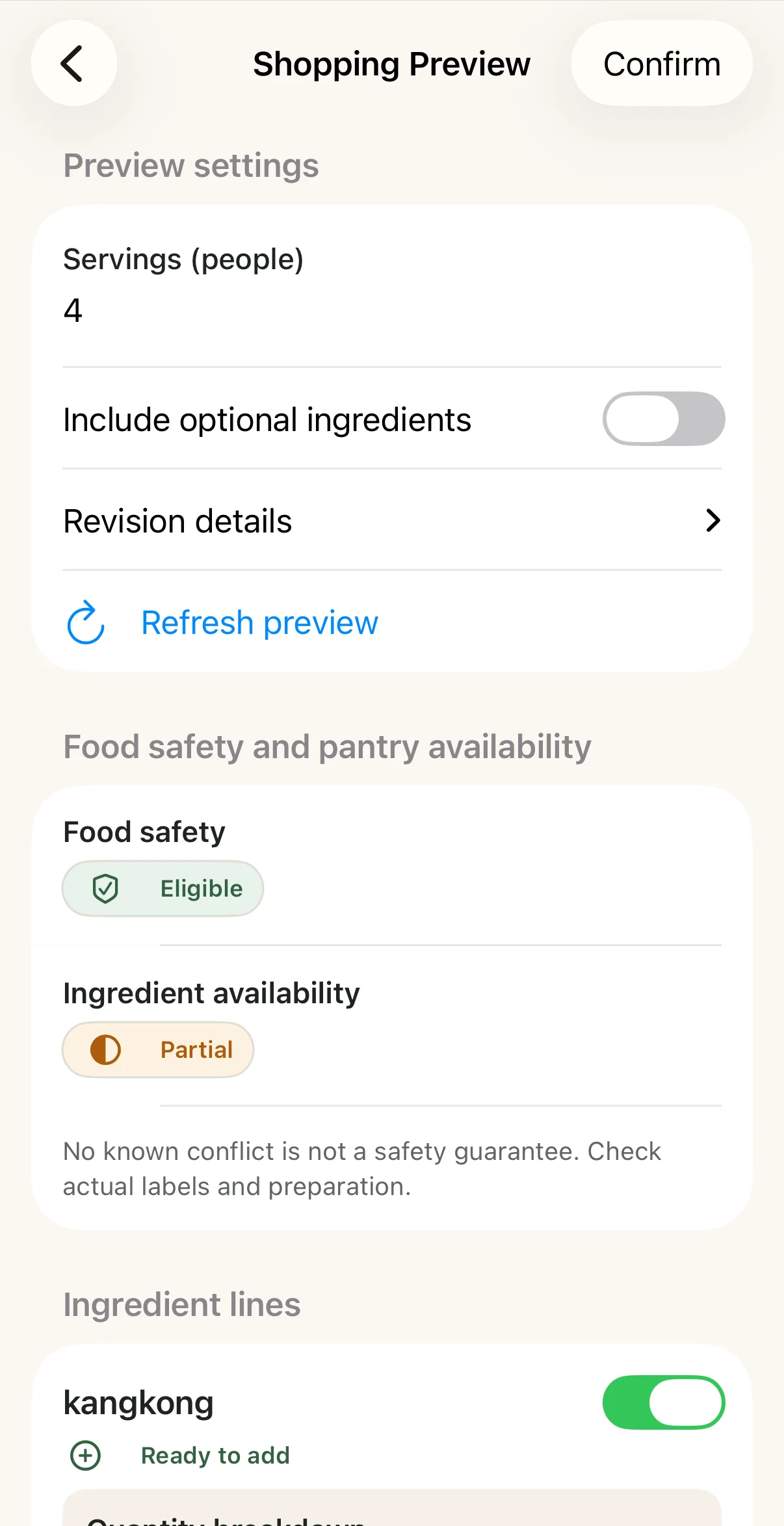
When someone wants to shop for a recipe, Provision first creates a read-only preview. It calculates missing quantities and checks existing pending shopping items. The user can review the proposed changes before confirming them. A later confirmation checks the current household data again. If stock or shopping records changed, the user must review a fresh preview. Request IDs also let the backend recognize retries instead of making the same change twice. This preview does not consume pantry stock.
Pip Chat can discuss recipes and products using selected household context. It has separate consent controls for chat and allergy sharing. The backend builds the context from authorized household records and checks recipe references returned by the model. The chat itself cannot directly change inventory, recipes, or shopping records. A shopping action opens the existing preview and confirmation flow.
Key technical decisions
Use database records for stock and safety checks. The app calculates available ingredients and pending shopping quantities through backend rules. AI-generated text does not replace those calculations.
Separate reading from changing data. Recipe previews and Pip Chat are read-only. Shopping confirmation is an explicit action with updated checks. This reduces the chance of duplicate shopping entries after a retry or a stale preview.
Keep household information and AI consent separate. The backend checks membership and consent. It limits the context sent to the provider and filters some personal identifiers, such as recognized email addresses and household member names. This reduces exposure, but it is not a guarantee that a user's free-text message contains no personal data.
Keep secrets on the server. The iOS app uses the Keychain for authentication credentials. AI provider credentials remain in backend configuration rather than inside the mobile app.
Testing and current status
Provision is still in development. The backend repository has a broad pytest suite for inventory, household access, recipes, consent, shopping previews, stale-state checks, and repeated requests. The project also has iOS unit and UI tests in GitHub-hosted macOS workflows.
Some advanced cooking, meal planning, and leftover functions have backend work that is not yet represented by complete native app screens. Physical-device camera and scanner testing, accessibility checks, and final release testing remain pending.
More screenshots